Robert Erkstam (00:15)
Our job is to teach you, the patient, how to take care of this chronic condition. And so that you can live a good life, have lymphedema but not have the symptoms of lymphedema.
You want to be independent in taking care of this. Our goal is that you shouldn’t need us more than a couple of times a year to check up. That’s the end goal. So that’s where we start looking at what we call the self-management phase. We’re going to try different things for you to do at home, and then we follow up. So one way that we phase it out in the self-management phases.
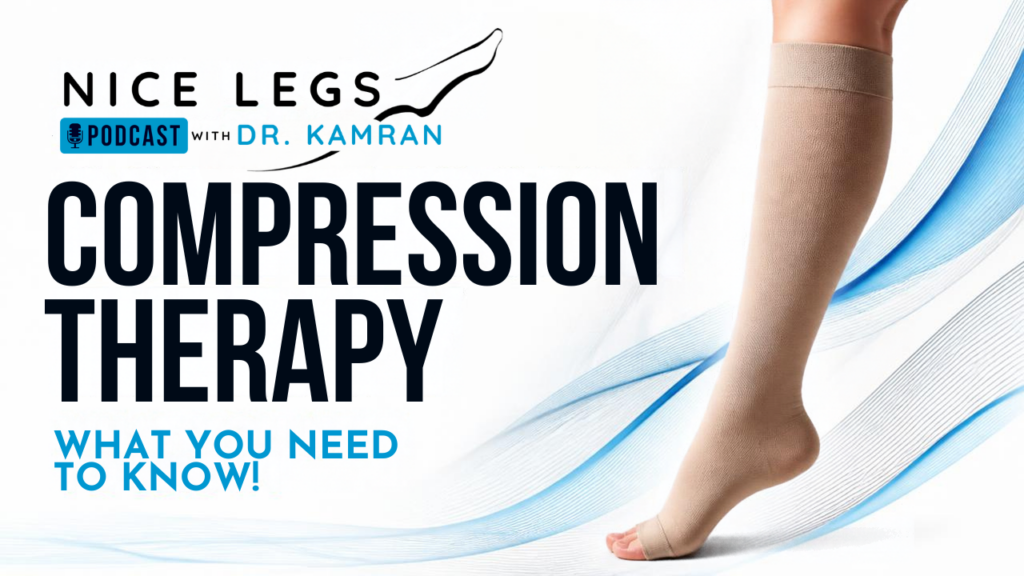
For example, most of our clients, if not all, need to wear compression garments. I say compression garments for lymphedema is like glasses for somebody who has a visual problem. You’ll be able to live your life and not have swelling if you have the right kind of compression garments. But getting compression garments right is very difficult. I would say the majority of patients that come to us have had a failed attempt of compression garments before they came.
They either they wore them and they either they couldn’t put them on in the first place. So they’re not wearing them or they’re hurting. They’re cutting in at the ankle. They’re rolling at the top and they’re just not fitting right or they’re not doing the job. They’re not keeping the swelling from coming back. been helping people get compression garments for 20 years. So we have learned a thing or two about what can work and what doesn’t work. So most of the time we get it right the first time, but it’s still the case that we try something and then follow up and follow up and follow ups. I would say that’s the most important part of phase two is to follow up and not give up until something really does work.
Our goal is that our clients can not see us for three months and then come back and there is still no swelling. Then we say, you got this now, you can take care of this yourself. And that’s the goal. And at that point, we start following up every six months.
Dr Kamran (02:23)
Robert, one thing, as I was wondering, occupational health and then lymph treatment, and I realized actually they’re very much linked because as an occupational therapist, you have been able to get people back to their occupation. That’s literally where the subject is starts, getting people functional again. And by managing their lymphedema, you’re making these people functional again, making them able to get out there and do their life.
Dr Kamran (02:53)
Because that’s what the specialty of occupational health is. And so I think it is very appropriate that you’re doing both. I think there are two things. Unfortunately, the majority of people, they kind of give up. They feel there is nothing can be done. I think those garments are extremely important. There’s a lot of expertise involved to know what kind of garment you are supposed to put on. You can’t just give them a prescription and say, go to Amazon and buy this and you’ll be good to go.
the swelling is so bad, or they’ve got a bad back, or they’ve got a bad knee, or your knee is so swollen you can’t even bend it to bend that far to put it on. And these pressures are pretty high, if I remember correctly. On average it was 40 to maybe even above that millimeter of mercury, correct? The amount of pressure you need.
Robert Erkstam (03:43)
Yeah, yeah, a lot of times 30 to 40 is what we try. If that doesn’t work, you can get them even at 40 to 50 million in millimeters of mercury, I guess. That’s high.
Dr Kamran (03:54)
And that is very, very hard to put those on. And if you do it wrong, you could definitely do a lot of damage, you can break the skin. So you really need a lot of coaching and you need somebody like you, Robert, who could advise them and teach them and know exactly what kind of compression is talking would work well for them. I think that’s obviously very important. A lot of people just…
⁓ give up and think this is it. Well that’s the worst thing you can do because unfortunately it’s a progressive disease, it gets worse and when you have lymphedema or any swelling of any nature, the tissue perfusion, the perfusion around the skin is not good. So a slight scratch or cuts is going to cause infection and once the bacteria gets there, they have a heyday because circulation is bad.
Then you get an infection and you can get septic from it. You could potentially get a skin breakdown. You could even end up with an amputation. Things can get really bad if you don’t have it treated. They say an ounce of prevention is better than a ton of cure. So you can’t just say, can’t, where it’s talking, I’ve tried everybody and this is the end of it. I’m not going to try it. You need to. The second thing is mobility. I see a lot of that, even in my practice,
It’s quite normal to have an extra 10 pounds of weight in each leg. And once you help with the lymphedema, once we help with the venous insufficiency or get rid of some of that fluid buildup in their ankles, then they can walk better. They can walk faster and we both know that your calf muscles or your heart for your veins, 90 % of the blood which gets out of your leg is through the action of your calf muscles.
That enables you to walk. The more you walk, the more you can get better drainage out of your legs. And even my orthopedic friends tell me for each pound of weight at your ankle, it takes 10 pounds away from your, on the knee. So less stress on your knee and less stress on your back. As you walk more, you can start losing some weight, your heart pumps better. And you already said the second reason for lymphedema is obesity. So.
If you’re not walking, you’re going to get these are very important issues to address. So you really got to understand, yes, it is a chronic disease, but just I love what you said about glasses. You you can’t just get angry at the glasses. sorry. You know, I just don’t want to wear glasses. But what are you going to do? You don’t have a choice. You got to see. And you got to walk. You got to function. And it’s extremely important to get.
to get help and to follow up with that. Please, if you don’t mind, mention a few things about a lot of my patients that want in. went there and the insurance companies don’t pay for that. And I believe now the law has passed that the government does help. There’s a lot of paperwork to be done, but I believe that some insurance companies do pay for it. So if we can expand on that a little bit for me, please.
Robert Erkstam (06:57)
Yeah, that was a really, really big news in our little world was a couple of years ago. an organization that has been trying to get this ⁓ act to pass. It was called the Lymphedema Treatment Act. And it was to require Medicare to cover first those bandages that we use when we do the treatment. So for all these years, we’ve been in business now for, or we’ve had this clinic for
20 years, ⁓ we have had to give the unfortunate news to most of our patients that the bandages that we absolutely need to do this treatment are not covered by insurance. So they had to pay for those out of pocket for most insurances. Most insurances follow suit when Medicare changes. And then they had to have these compression garments. Like I said, they’re like glasses. If we go through phase one and we treat it and then we don’t
complete it with phase two and get the appropriate compression garments, we’re going to start over at some point. It’s going to come back and we’re going to have to start over. So they absolutely needed these compression garments and still do, but in most cases they were not covered. So that’s been a real struggle for all these years. So we were pretty excited when this lymphedema treatment act that they’ve been pushing for for years, ⁓ tirelessly trying.
I would sometimes say when somebody asks me, these compression garments covered? I would say, it will take an act of Congress to get these paid for. Literally. And that act of Congress did finally happen. So now the new rule with the Lymphedema Treatment Act is that Medicare and many insurance companies are following suit. They’re all a little different, but Medicare now
Dr Kamran (08:30)
That’s true.
Robert Erkstam (08:48)
covers three pairs of compression garments ⁓ per six months, which I think is very appropriate because no one would have one pair of socks in their sock drawer that they wear every day. So three seems reasonable. It’s enough so that you can rotate and wash. And then after six months, you can refill with another three. It covers custom-made compression garments when necessary.
And those can be in the price range of one to $2,000. So that was not available to a lot of our clients, but there are many times when there isn’t anything that’s already made that’s going to work. And we have to do them custom made to the shape of the patient. They also cover what’s called nighttime compression garments. They’re thick padded garments. And they cover, I believe it’s two of those every two years.
So you can have one to wash, one to wear, but they will last longer. Those can be very useful, but the price is high when it was out of pocket. So that’s available. Also, the compression pump that I mentioned that we use in phase one. some clients in this phase two when they’re self-managing, if wearing compression garments alone doesn’t keep the swelling at bay, then they can also qualify
to have one of those machines in their home. And they can sit at home in their own recliner and do this. And I should say, like everything with outpatient Medicare, when I say Medicare covers it, they cover 80%. So then it depends on if you have supplemental insurance or not. So there can be co-pays on this. But that has so ⁓ nice since that law passed, because now we feel like we can provide the right care.
and the right follow-up, what we’ve been wanting to do for 15 years.
Dr Kamran (10:40)
Well that is wonderful, thank you so much. That’s so informative. I actually learned a lot about that. I thought I knew a little bit about it, but I now realize I didn’t know much at all. And that’s really very helpful, I appreciate that. I think in some of these meetings I go, I’ve noticed some of those compression stockings that work with lithium battery before you have to be plugged to the wall. Now you can even put it on for 20 minutes when come home or whatever.
There is a tremendous movement in that area. Of course, it usually happens when insurance companies decide to pay for it. Industry gets involved and then you try to come up with better and bigger things. of course, we have enough electricity to get the car moving. So when it came to lithium batteries now, you don’t have to be plugged to the wall, is wonderful.
So Robert, there’s always one more thing, right? So I noticed on your website you have mentioned a few things that patients can do at home, a few tips, if you would be so kind to share that with us.
Robert Erkstam (11:41)
So the world of lymphedema, we talk about two phases, but we’ve kind of coined the term called the phase three. been so much research on how lifestyle can impact our lymphatic system. So that’s where we have some control, you could say, or things that we can do ourselves to keep a healthy lymphatic system. But if we begin with more basic things,
If you do have some swelling, the first line of defense is to keep your feet elevated. any elevation is better than none. ⁓ And then of course, exercise, you mentioned about the calf muscle pump. ⁓ You cannot underestimate the effect of that. So really any form of exercise involves muscle motion
the ankle motion, the calf, thigh, if it’s in the lower extremity. So exercise is good directly for the lymphatic system. But then we get into more of the lifestyle aspects. So I mentioned, for example, obesity being one of the causes. So while we can’t cure lymphedema, we can do something, not that it’s easy, but we can do something with an underlying cause if that’s obesity, also things like insulin resistance and those kind of things.
And so when you start looking into the basics of lifestyle, it is we have to get good sleep. ⁓ Lack of sleep increases inflammation. That’s proven and we want to keep chronic inflammation down when we have lymphedema. And there’s a long list of other reasons, but basic things like sleep, move our body, eat nutritiously and manage stress.
You can make, and we won’t have time to get into all that here, but you can make a lot of connections between stress and lymphedema. So I didn’t mention in the intro that I am also working a colleague in ⁓ California, her name is Leslie Keith, and she’s published a couple of books on how food, nutrition, especially, and lifestyle ⁓ impacts lymphedema.
And there is a lot of exciting research on that. Together with her, we do have an online program where people can learn more about lifestyle and lymphedema called lymphatic lifestyle solutions. But the idea focuses on those four things. Sleep good, relax, exercise, and eat good. And it can have a tremendous impact on laying the groundwork of a healthy lymphatic system. Like you mentioned, ounce of prevention.
Dr Kamran (14:11)
Fantastic. Therefore, more of a reason to visit your website and get more educated. And hopefully, our audience will have more questions for us in the future so we can come back and answer some more questions for the audience.
Thank you so much for your time, Robert.
In the meantime, if I have, would have this opportunity to ask you if somebody likes to come and ⁓ see you, how do they find you and where are you located?
Robert Erkstam (14:39)
So we’re located on Gordon Road in Wilmington. We have our little clinic there. And you can find us on our website. There’s a lot of resources about some of these things we’ve talked about there too. So our website is selfcaretherapy.com. That’s S-E-L-F. Sometimes it sounds like South and I’m saying it, think, it’s selfcare, like in caring for yourself, therapy.com.
Dr Kamran (15:06)
Thank you so much. I appreciate it.
Robert Erkstam (15:08)
Thank you.